Stories

Marcus Benning ’17

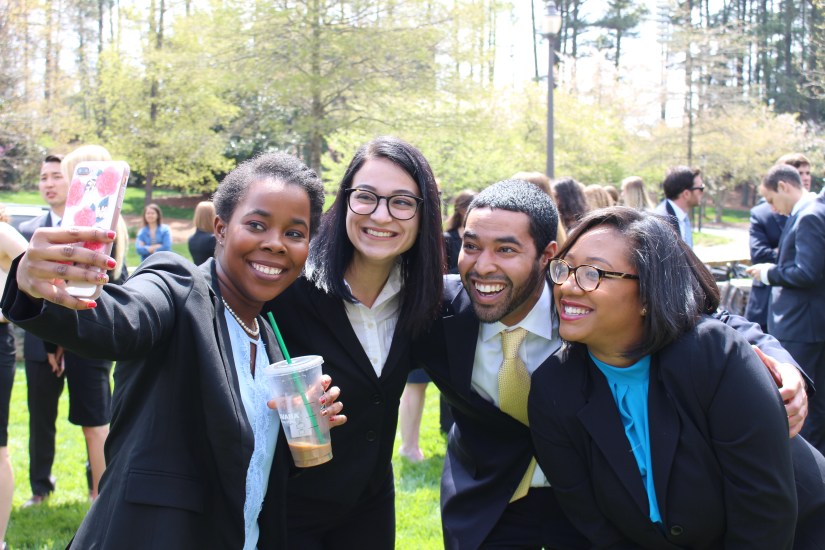
As a Duke undergraduate, Marcus Benning, who served both as  president of the Black Student Alliance and senate president pro-tempore for the Student Government, was instrumental in establishing a new student social housing group focused on black culture. Now, as president of the Black Law Students Association (BLSA) and as a LEAD fellow, he is helping lead the diversity and inclusion effort at Duke Law.

“I really love Duke,” says Benning. “But my relationship with Duke is complicated, because I want to change so many things about it.”

Attending “Common Ground,” a student-led retreat organized by the Duke Center for Race Relations early in his sophomore year was a pivotal experience for Benning, who majored in history and linguistics. It helped him understand, he says, the experiences of diverse minority groups on campus, and laid the foundation for many of his leadership activities. “We spent three days talking about race, gender, and sexual orientation. We argued and cried and figured it out together. It kind of changed my life.”

Benning, a native of Atlanta, credits his mother with sparking his passion for community engagement and social justice. She also made sure he had people in his life “who would mentor me in ways she could not,” like his high school band director, who Benning says taught him the importance of punctuality, respect, hard work, and perseverance through music. Shortly after arriving at Duke he found two more mentors at the Mary Lou Williams Center for Black Culture: Director Chandra Guinn and Assistant Director Sean Palmer. They were instrumental, he says, in his development as a leader and as a scholar.

Guinn says Benning’s personality was evident from the first day she met him. “He had very strong opinions, a willingness to share them, and a willingness to have his mind changed,” she says. “He is a young man with a desire to see other people excel along with him.”

Benning got started on doing that when he secured a $500 award from a Duke University think-tank during his freshman year to launch the Duke Connects Challenge, an effort to build ties between Duke students and Durham residents. He invited his classmates to submit proposals for projects that would benefit the city, as measured by their sustainability, affordability, and community impact.

“From talking to other students, I learned about lingering tensions between Duke and Durham,” he says of his motivation for the challenge. “I got the impression they were exacerbated by the lacrosse incident and were never completely resolved.” The winning challenge proposal, submitted by residents of Randolph Hall on East Campus, engaged students in cleaning up and improving public parks.

As a sophomore, Benning worked successfully to establish a new academic and social housing group at Duke for students interested in immersing themselves in black cultural awareness and academic engagement. Open to students of all races and ethnicities, the Black Culture Living Group on Central Campus houses 22 students and works closely with the African and African American Studies Department and the Mary Lou Williams Center to host educational events and discussions relating to the diversity of the African Diaspora.

“This group is particularly important as social justice campaigns such as Black Lives Matter take shape,” he says. “Hopefully students who have lived in the Black Culture Living Group and others like it will launch movements of their own to tackle the injustices they experience.”

Aiming for a career in corporate law, Benning decided that Duke remained a good fit for law school academically, and that his work on campus wasn’t finished. Active in BLSA as a 1L representative, he is pleased, now as president, to be partnering with “seven other talented, determined second-year students” on the executive board. “Because BLSA’s board is so diverse — they bring experience from a variety of industries, including education and energy, and have lived and traveled all over the U.S. and around the world — our initiatives and events will naturally capture a wide range of perspectives and reach broad audiences.”

In September, Benning served as both a host and panelist at a community discussion of the works of Harper Lee that attracted students and faculty from across campus. Framing the conversation as an exploration of idealism and personal responsibility to enact positive social change, he challenged his fellow students to “reimagine Duke and reimagine the world to seek and expect the best of this place, and to thrust that vision into reality with our activism.” He drew a parallel between the falsely accused character of Tom Robinson in To Kill a Mockingbird, and the unarmed black men whose deaths sparked the Black Lives Matter movement.

“The story isn’t new, and neither is our responsibility as future lawyers and scholars of all disciplines to determine our role in reimagining the world as a just and equal place,” he said.

“One of the beautiful things about Marcus,” says Sean Palmer, one of Benning’s undergraduate mentors, “is that he left undergrad with an agile mind that I think is being empowered at the Law School.”

One of BLSA’s top priorities for the current academic year is addressing the discomfort students of color sometimes feel with the way race is handled in the classroom. As an example, Benning cites his own discomfort when one classroom video on dealing with difficult negotiators featured the cultural cliché of “an angry black woman” to make the point. “In the 21st century, racism is not about people’s intent, but about the impact of what they do and the signals that you’re sending,” he says.

BLSA recently surveyed black students about their experiences at Duke Law in class and out, and is working to compile the data into a comprehensive report with concrete recommendations for the dean.

Benning, who interned at Burr & Forman in Birmingham, Ala., and Smith Moore Leatherwood in Raleigh over his 1L summer, intends to spend much of his last two years at Duke advocating for increasing university funding for “the Mary Lou,” the organization that helped nurture his leadership skills and his activism. “The whole purpose of me being here is to shake stuff up,” he says. “There’s no reason why this place should be the same way it was when we got here.”

Stories

Doedens, Blank, and Hogue ’15 present Capstone Projects

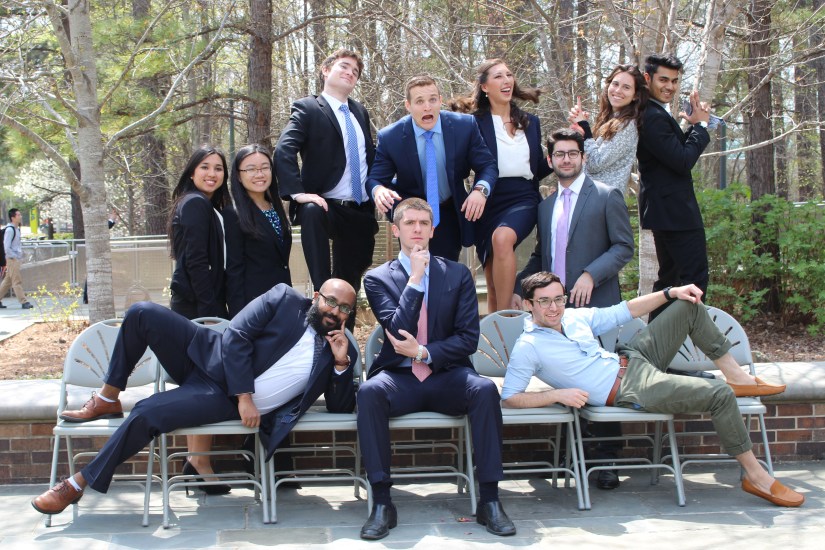
Joline Doedens, Karlee Blank, and Madeleine Hogue, all members of the Class of 2015, made presentations to the faculty last month as part of the final requirement for completing their third-year capstone projects.

Often interdisciplinary in nature, capstone projects are selected and designed by students based on their academic and professional interests. Students are required to present their projects, which can take the form of a scholarly article, model bill, or other work product, to the Capstone Year Committee.

Professor Kathryn Bradley, who administers the program, says participating in a capstone is ideal for students who want to explore interests that go beyond what is discussed in the classroom or build on the experience they’ve gained in the workplace or in law school. “A capstone project can be a perfect way to bring things together, often resulting in publishable work or in a deliverable that has practical use to laypersons or lawyers,” she said.

Building off of the research and interviews with local judges she undertook for capstone research paper, Doedens wrote a guidebook to equip victims of domestic violence and practitioners with the knowhow to obtain a protective order and access other resources related to their situation.

Professor Charles Holton '73, director of the Civil Justice Clinic, with Joline Doedens '15Professor Charles Holton ’73, director of the Civil Justice Clinic, with Joline Doedens ’15

“I learned from working with clients in the Civil Justice Clinic that clients often have no idea about how the court systems work,” Doedens said. “They are terrified something bad will happen.”

Doedens researched the differences in how domestic violence cases are handled in seven North Carolina counties and compared their current practices to the best practices suggested by the North Carolina Administrative Office of the Courts (NCAOC). She discovered that a lack of resources, especially in rural counties, coupled with victims who did not fully understanding their options and rights resulted in lopsided legal representation as well as inconsistencies in practices.

For example, courtroom safety and security standards vary widely in the seven counties. “Defendants often walk across the courtroom to their bench unaccompanied. Even though they are shackled and handcuffed, they can still attempt to get away or distress the victim,” she said during her presentation.

Although some courts may not be able to have extra bailiffs in the courtroom, as suggested by the NCAOC, Doedens believes following the other guidelines – such as arranging separate exits and entrances for plaintiffs and defendants, making sure plaintiffs and defendants sit on opposite sides of the courtroom, and ensuring both parties respect courtroom etiquette – will help to create a safer environment.

She plans to distribute brochures and flyers promoting the online version of the guide in grocery stores and women’s shelters.

Blank focused her capstone project on issues American lawyers confront when collaborating with foreign law firms that represent American clients.

“My professional interest in the interplay between American attorneys and local foreign counsel evolved into an academic interest through Professor Bradley’s Ethics course and Professor [Bruce] Elvin’s class on the Business and Economics of Law Firms,” she said. “That class introduced interesting questions about the ABA’s Ethics 20/20 work as well as the future of globalized law firms, the logistics of managing offices overseas, and the challenges presented by legal outsourcing.”

Karlee Blank '15Karlee Blank ’15

An independent study Blank completed in the spring semester of her second year on the ethical implications of working with lawyers in civil-law systems in Angola, Mongolia, and Venezuela served as the foundation of her capstone project. “I wanted to take this research a few steps further and identify practical mechanisms for reducing the risks when collaborating with such counsel,” she said.

Blank’s Risk Mitigation Manual: Transnational Legal Collaborations, describes mechanisms American law firms can use to assess and “effectively mitigate the inherent risks” involved in working with foreign counsel. Her accompanying methodology paper identifies challenges American law firms may overlook before entering into transnational representation such as socioeconomic, cultural, and political differences, and logistical barriers like time differences between the two countries or the difficulty of finding a competent translator.

Blank said she feels encouraged by the positive feedback she’s received from legal professionals in and outside of the Law School. She plans to continue to refine her project and Risk Mitigation Manual after graduation. “After publishing the Manual,” Blank said, “I plan to develop a course or webinar series on the best practices for successful transnational collaboration.”

For her project, Hogue engaged with the question of why juveniles waive their appellate rights at a higher rate than adult criminal defendants. Her paper incorporates interviews with practitioners in the juvenile justice system and explores a variety of topics, including what role attorneys play in the decision to appeal, and whether children’s best interests or expressed interests are taken into consideration when deciding whether to appeal. She also considered how parents and legal guardians influence the appellate process and whether the threat of shouldering court fees in the event their child loses an appeal has an impact.

Hogue presented her research during the Early Career Scholars session at the Seventh Conference on the Future of Adversarial and Inquisitorial Systems, hosted by the University of Warwick School of Law and Criminal Justice Centre. This year’s theme was “Protecting the Vulnerable Accused in Criminal Proceedings.”

Bradley said Doedens, Blank and Hogue’s work demonstrated creativity and self-initiation. “For each,” she said, “I think the work truly was a ‘capstone’ to their time at Duke Law.”

Stories

Duke Law students answer Legal Aid inquiries as “lawyers on the line”

IMG_1856She may only be midway through her first year of law school, but Ashton Garner ’17 has already helped a client reach a satisfactory settlement of a landlord-tenant dispute.
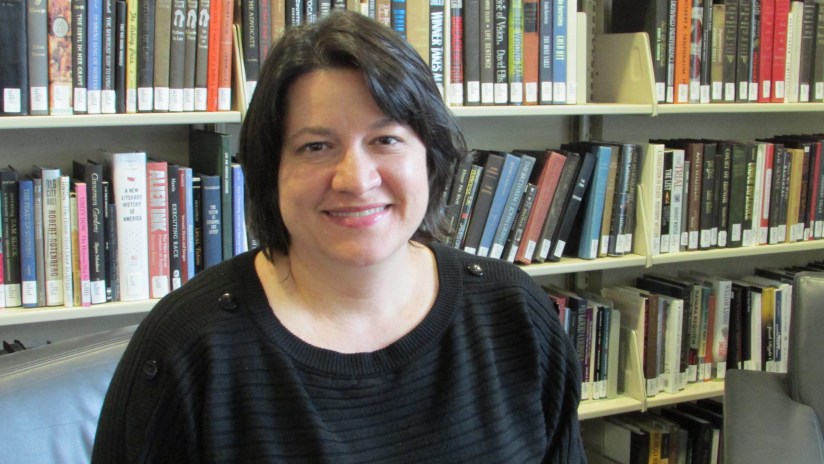
Garner serves as a volunteer “Lawyer on the Line” through a new partnership between Duke’s Office of Pro Bono and Public Interest and Legal Aid of North Carolina (LANC), which runs a broader program offering legal advice to low-income individuals by phone. Supervised by LANC attorneys, Duke Law students interview callers and research their problems, then offer concise answers to the legal questions raised. In some cases, they might write letters or craft documents on behalf of these clients.

Garner had the opportunity to put her writing and consulting skills to the test with her first client, an individual in a landlord-tenant dispute. Shortly after signing a long-term lease and moving in, Garner’s client realized the home was in serious need of repairs. Because the landlord failed to make the necessary repairs on the home, the client decided to move out, but the landlord demanded the client honor the lease. Garner said she was surprised the landlord involved in her case was so amenable to the terms outlined in the letter she wrote on behalf of her client. “I think once the landlord was presented with the applicable law, there was no way to deny it was the right thing to do. The client was very appreciative of my help, and it felt great to help someone who had been wronged get some relief.”
Garner said she was drawn to this volunteer opportunity as a way to help others and put her classroom knowledge to real-world, practical use. The Lawyer on the Line program affords the time and space for student volunteers to hone their writing and consulting skills to ensure clients feel heard and understood, she said.

“I have to be able to explain the law to the client in a simple way that is understandable to someone without a background in the law. You do not realize how challenging that can be until you try to explain legal concepts without using legal jargon!”

IMG_1857

Lawyer on the Line student director Caroline Sorensen ’16 was introduced to the program last summer when she worked as an intern at the Legal Aid Centralized Intake Unit. Sorensen spent each day on the phone providing legal advice to clients whose cases couldn’t be transferred to local LANC offices. “At the end of the summer, LANC mentioned they wanted to get Lawyer on the Line started at Duke, and I knew I wanted to help get it going,” she said.

Since the program began in January, student volunteers have assisted with nine cases ranging from employment, private landlord tenant, and consumer issues to record expunctions.

“Our students help bridge the service gap,” said Kim Bart ’02, Assistant Dean of Public Interest and Pro Bono. “This project supports Legal Aid of North Carolina’s work by expanding their pro bono reach, while providing a great opportunity for Duke Law students to develop important practice skills.”

Garner feels her involvement with Lawyer on the Line is helping her prepare for her summer internship with a law firm in Atlanta. Taking responsibility for direct client interaction has helped improve her problem-solving skills as well as her ability to relate and communicate clearly to her clients, she said.

Although the program is in its early stages, with 40 highly engaged students signed up to volunteer, the support of The North Carolina Bar Association, and guidance from LANC, Duke’s Lawyer on the Line is poised for growth. “This might be the smoothest a school has ever implemented the program in its first semester,” said David Wormald, Lawyer on the Line Coordinator at LANC. Duke Law students, he said “are completing files very quickly, but with well-written summaries that cover the depth and breadth of the matter.”

If the program continues on its current path, Duke will be assigned a second supervising attorney, which will allow students to take on additional cases and help more people in the community. “I hope to help get Duke Lawyer on the Line off to a strong start so that it may continue to benefit Duke students and the community for years to come,” Sorensen said.

Photography

Raven’s last weekend

These are a few photos from the last (happy) weekend I was able to spend with my girl, Raven. We woke up early that Saturday and had breakfast on the back porch. I had no idea that cancer was rapidly taking over her body. We had to say goodbye to her the very next weekend.

You can see more pictures and videos of Raven on Instagram. I switched the handle over to Riley, but if you scroll back a bit, you can see them.

IMG_1255IMG_1259IMG_1272

Stories

The Duke PreLaw Fellowship program: Laying the groundwork for professional success

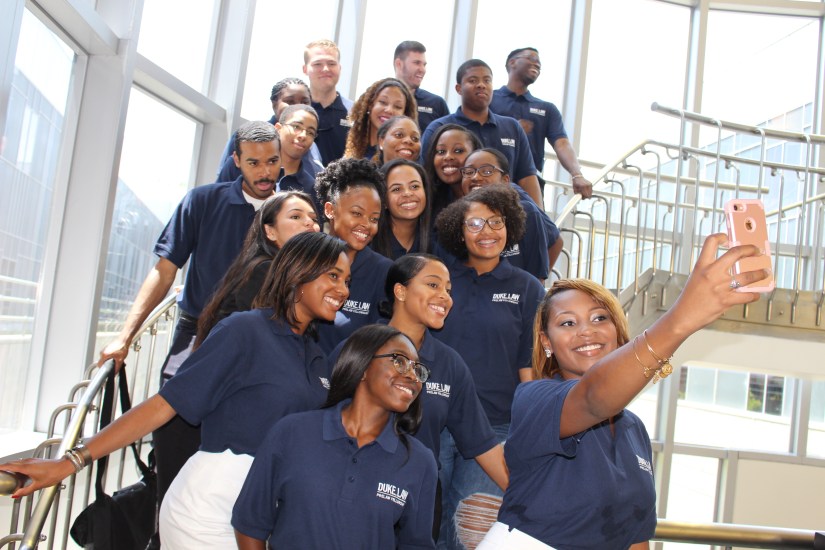
IMG_8710The Law School welcomed its first cohort of PreLaw Fellows this past June.

Twenty rising juniors from eight colleges and universities in Georgia and the Carolinas spent two weeks in residence at Duke, taking classes in criminal law, legal writing and analysis, and LSAT preparation, and gaining insight and advice on applying for and succeeding in law school.

The goal of the full-scholarship “pipeline” program is to introduce students from underrepresented communities to the rigors of law school and the benefits of having a legal education, as well as to ensure they have essential information to help them navigate the admissions process, said Ebony Bryant, director of diversity initiatives at Duke Law. “I had worked in law school admissions for 10 years and saw some of the struggles that some first-generation or minority students had in applying late or in lacking the information they needed to get into a school like Duke Law,” she said. “They often ‘come into the game’ late, so they’re too late to qualify for scholarships. They need to know at least two years out what they need to improve on, how much money to save, and which courses to take to help them with reading comprehension.

“One of my biggest professional goals is making sure students, regardless of their background, the school they went to, how they started in life, that they could go to the law school of their choice,” she said.

Admission to the program mirrored the law school application process. Applicants were selected based on transcripts, recommendation letters, Skype interviews, and writing samples. “Writing is so important to success in law school and as a lawyer,” said Bryant. “We wanted to make sure we were admitting the best students from each school.”

Students spent four days each week immersed in doctrinal courses — Criminal Law with James Coleman, the John S. Bradway Professor of the Practice of Law, and Legal Writing and Analysis with Clinical Professor Rebecca Rich. They received the same books first-year law students use for those classes and experienced similarly rigorous expectations and instruction. Each produced a capstone paper and made a presentation in Criminal Law.

“Professor Coleman gave us an assignment in which we had to pair up with another fellow and explain why a specific case decision should remain or why it should be overturned,” said Kourtney Johnson, a political science and economics major from Spelman College in Atlanta. “We had to rely on the cases that we read throughout the program in order to back up our arguments.”

“As I had hoped, the students were eager to learn, very engaged, and very opinionated!” said Coleman, who called the fellowship program “an excellent introduction” to studying the law. “I love teaching and interacting with students at the very beginning of their journey to become lawyers,” he said. “They learned that having an opinion was very different than having an informed opinion. By the end of the two weeks, they had worked hard to make sure that their still strong opinions were informed by the cases they read and our classroom discussions.”

Fridays were dedicated to LSAT preparation, professional development, and “Real Talk” sessions with Duke Law administrators. Lewis Hutchison, assistant dean for student affairs, discussed the transition from undergrad to law school, Tia Barnes ‘03, assistant dean for academic affairs, provided them with tips on how to succeed in the classroom, and Bryant offered advice on the admissions process. They also met Duke Law alumni, visited a local firm, and went on a tour of the State House of Representatives in Raleigh. “The main reason why we went to the State House was to show them this is where you could be,” Bryant said. “Part of access is allowing people to see themselves in a place.”

David Duncan, a psychology major from Elon University, said he enjoyed the opportunity to connect with legal professionals. “This glimpse into a law career was invaluable to my future success as a lawyer.”

Malik Wilson, a sociology major at Morehouse College in Atlanta, said the fellowship program gave him a clear sense of what he needs to do to achieve his goal of studying law. His “amazing” professors confirmed his interest in doing so, he added. “Professor Coleman’s level of experience and knowledge are truly unmatched making learning in his Criminal Law class an adventure every single day,” he said. “Likewise, Professor Rich’s tips and tricks regarding legal writing were invaluable.”

Bryant said she was impressed with the inaugural class of fellows. “Now they can envision what law school is and they can make a clearer decision based on the time they spent here,” she said. “That’s what it’s all about — it’s giving someone the opportunity to make a good decision.”

Video

Advice for 1Ls

Duke Law’s LEAD Fellows offer advice to the incoming class. LEAD Fellows serve as orientation leaders for small groups of first-year students during LEAD Week. Throughout the remainder of the year, LEAD Fellows serve as advisers to their LEAD groups and help them navigate their first year at Duke Law.

Shot and edited by me.