In preparation for their 1L summers, students endure an exhaustive round-robin interviewing process with firms from all over the country.

content creator
In preparation for their 1L summers, students endure an exhaustive round-robin interviewing process with firms from all over the country.
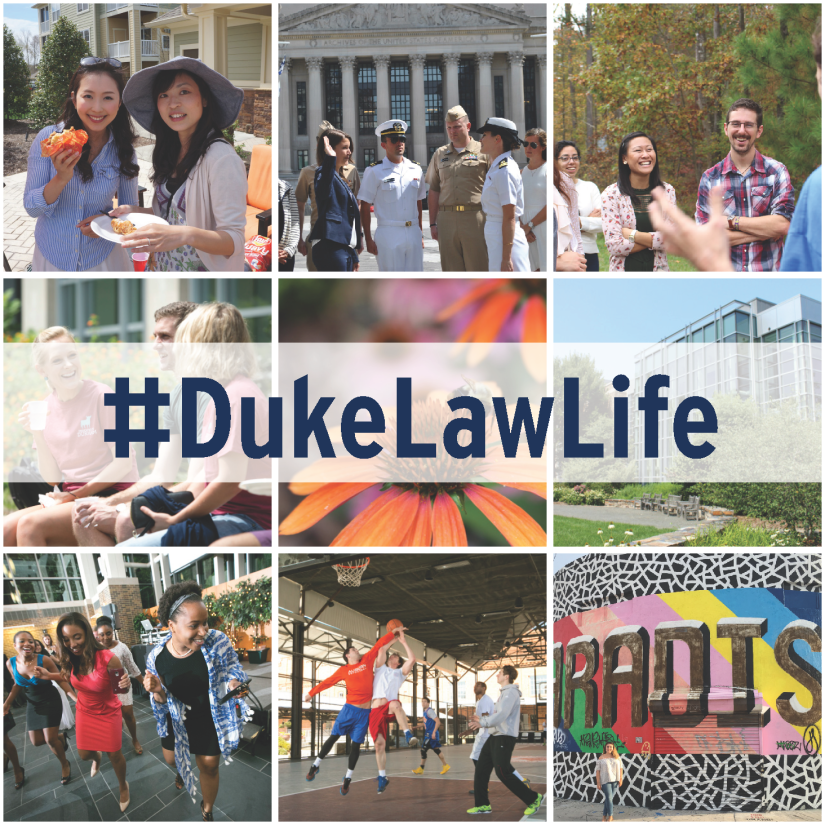
I created this piece in 2016 for the LEAD Week (orientation week) packets to advertise our social media channels.

Eleni Bakst ’17, Suzie Jing ’18, and Blair Mason ’18 share their experiences working with families detained while seeking asylum at the South Texas Family Residential Center in Dilley, Texas. Their project was one of many organized by the Duke Law Office of Public Interest and Pro Bono as part of its annual Southern Justice Spring Break Trip.
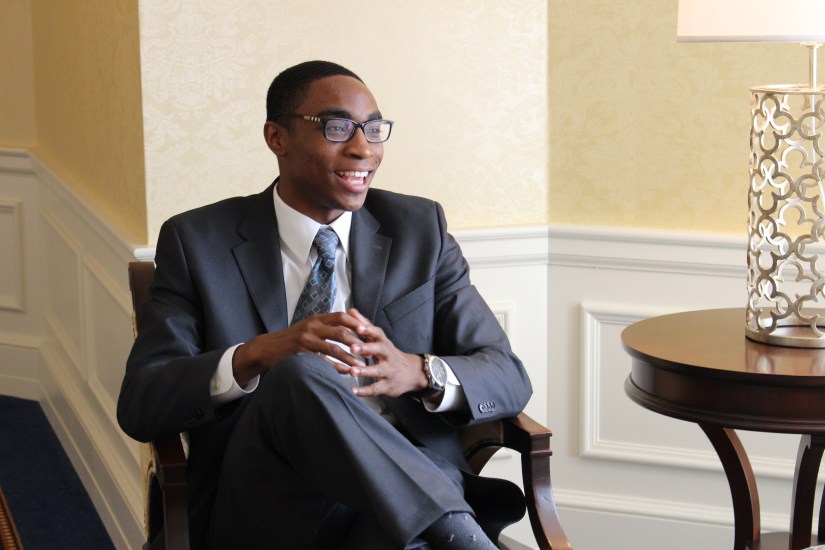
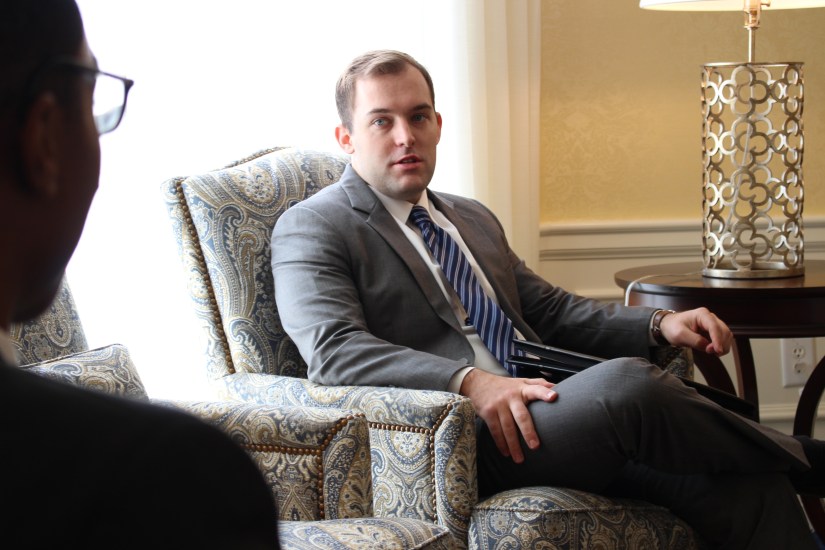
Two recent Duke Law graduates will begin their careers with the federal government after navigating the highly competitive selection process for the Legal Honors Programs in two executive branch agencies. For each, gaining entrance to the highly selective program represents the culmination of years of deliberately focused study and skill-building in their respective fields of interest, as well as the support and mentorship of Duke Law career counselors and alumni. Ocoszio Jackson ’17 will enter the Department of Housing and Urban Development’s Legal Honors Program, working out of the New Orleans’ field office. Jasmin Lott ’17 was selected for the program in the Department of Justice. Both students credit their interests in public service and a desire to uplift people in need as motivation for pursuing these positions.
“The agencies look for candidates with strong legal skills and good judgment, who can add value immediately,” said Assistant Dean Stella Boswell, who directs the Office of Public Interest and Pro Bonoand advises government and public interest students and alumni through the Career Center. “They also look for students and graduates with a passion for public service and a commitment to the mission of the agency. “These students worked exceptionally hard to qualify for these positions and make it through the many steps of the application process.”

Jackson said he learned of the importance of stable housing early on while living with his grandmother. He recalled there was a home across the street, which he later found out was a government subsidized home. “There were families that were constantly in and out of that home. I always wondered ‘Why do we always have new neighbors? Why do they have to leave?’” he said. “By contrast, we had a place we knew was ours, that we always went to, where we were able to take care of ourselves, were able to have a good night’s sleep — where we felt safe.”
Jackson, who majored in political science at Morehouse College, said he became interested in housing finance during the market crash. HUD came onto his radar during his second year at Duke Law when the community surrounding his alma mater — the West End of Atlanta — received a $30 million redevelopment grant. His interest in working for the office only grew after attending one of HUD’s on-campus informational sessions.
After working for GSK in Durham and the Brennan Center for Justice in Washington, D.C. during his 1L summer, Jackson spent the following summer at K&L Gates in Washington. “I had a wonderful experience there learning how a large, international law firm works,” he said, adding that it helped him to refocus his career goals. “I’m excited about starting my career doing government work and the day-to-day impact it will have.”

Lott, who has a strong interest in civil rights, looks forward to returning to the Department of Justice where she held a Duke in D.C. externship last fall. She said recent conflicts between police and communities of color influenced her interest in pursuing a career in criminal justice. “It’s become an even more important issue to me personally because I’ve seen the unraveling of Ferguson,” she said. “Once I got here, I saw where the need was.”
She credits the experience gained from working in the Civil Justice and Children’s Law Clinics for helping her get practice-ready and learn how to phrase questions and dig for answers. “I’ve gotten a lot of concrete skills by actually working on cases, and frankly being able to talk about actual substantive legal work that I’ve done in interviews helped me,” she said. Lott spent her 2L summer working for both the NAACP Legal Defense & Educational Fund, where she assisted with civil rights litigation, and Neufeld Scheck & Brustin working on discovery review in civil litigation related to wrongful convictions and police misconduct.
“Just seeing how egregious some of the civil rights violations were and getting the sense that these officers felt like they were above the law was very infuriating for me, but it was powerful to feel like I was in the position to do something about it,” she said.
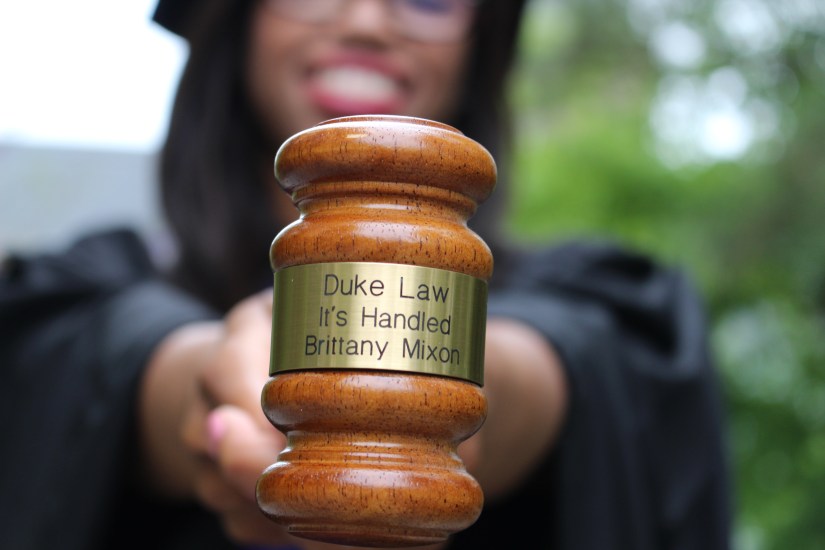
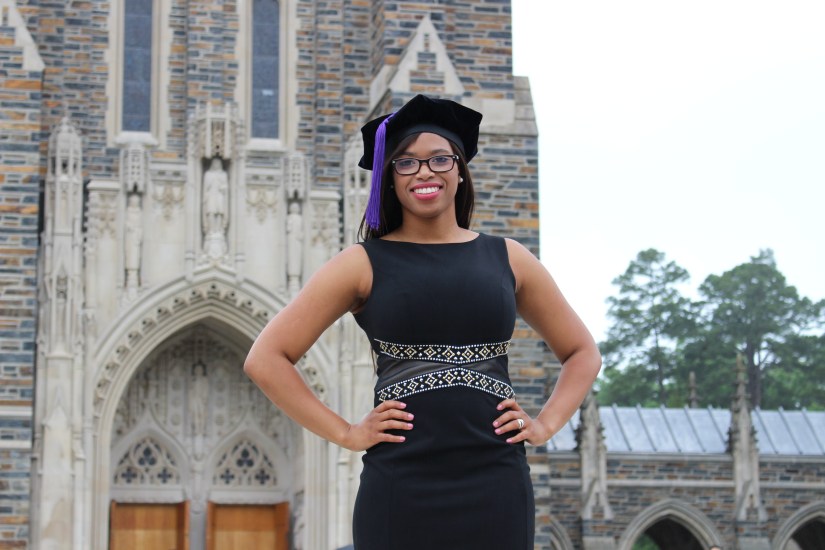
It was a little overcast that day, but it didn’t stop Brittany from shining during this mini graduation shoot.



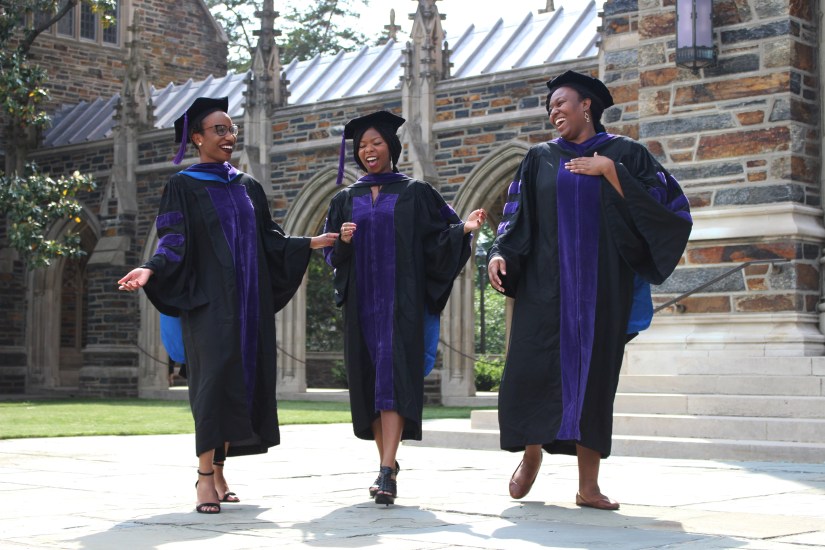
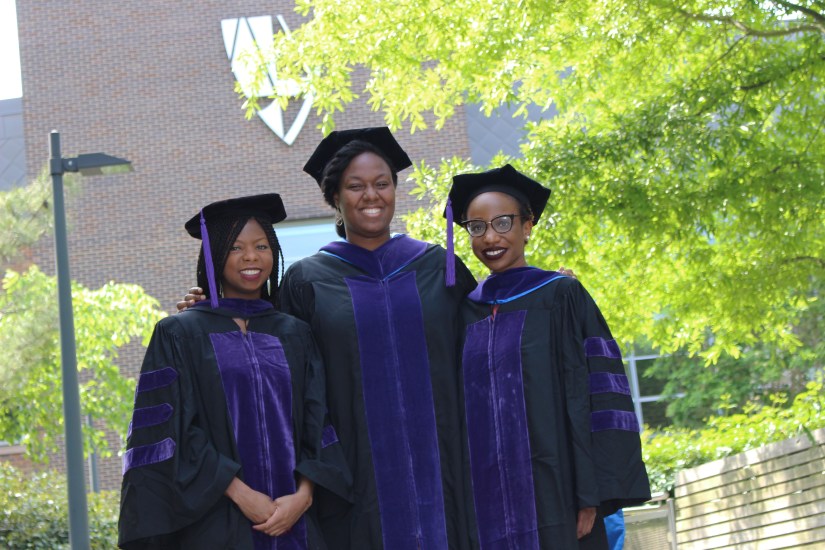
These three law school BFFs decided to do their graduation portraits together. It was an ungodly hot day and we did a lot of walking around campus…but how could you not be excited when graduation is right around the corner?
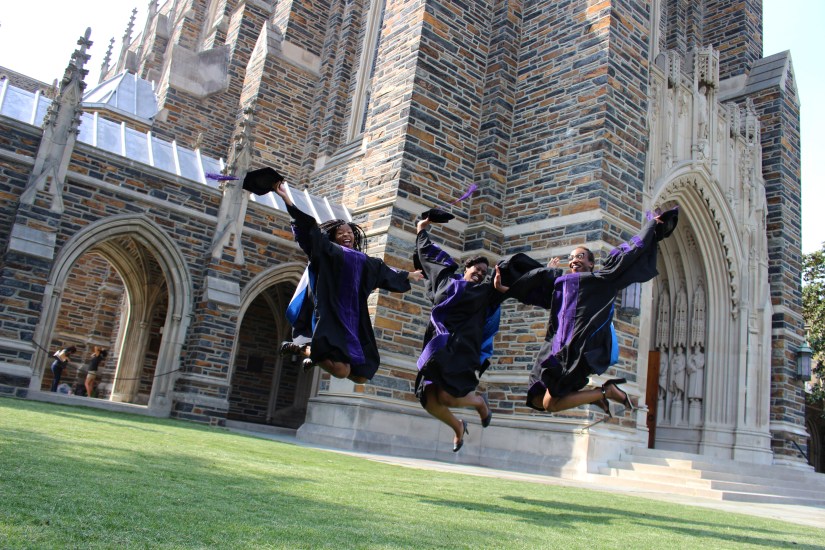
A few favorites from my mini graduation shoot with Ocoszio.


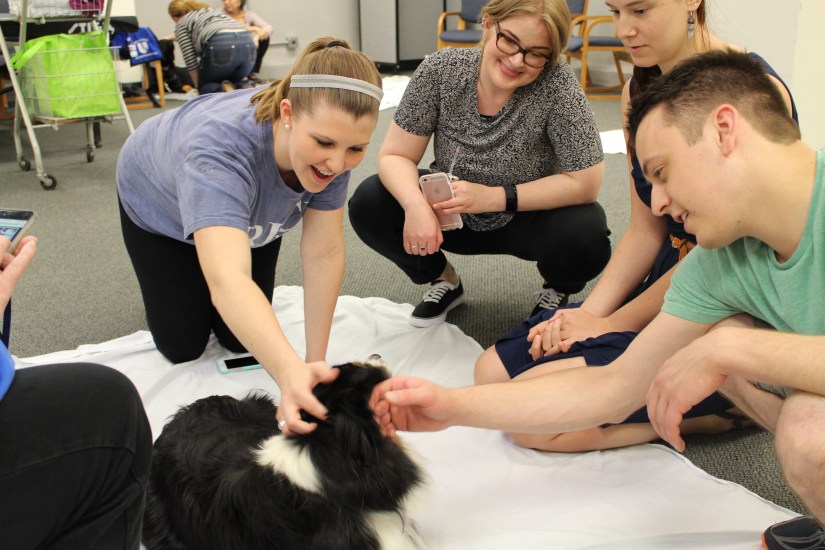
Therapy Dog Day might as well be a national holiday at Duke Law. Twice a year, pups set up shop in the student lounge and offer hugs and snuggles to stressed out law students.


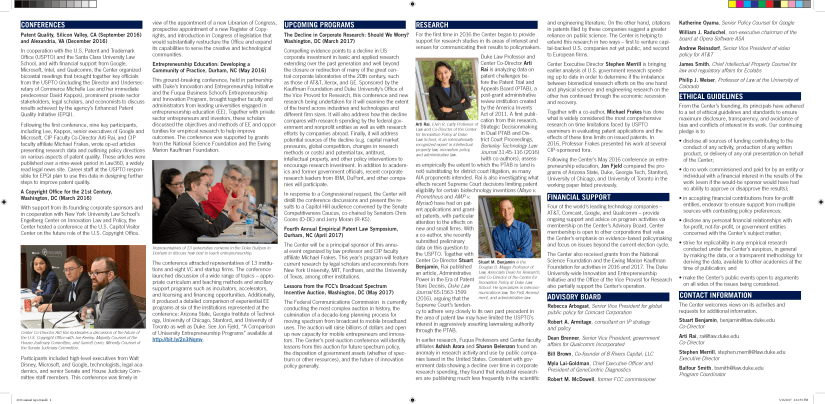
Double-sided trifold annual report designed for the Center for Innovation Policy.


Gabs Lucero first learned about sexual assault as a sixth-grader in Fort Collins, Colo., when a friend told her she’d been abused. “I didn’t know what sexual abuse was, but as I learned more about it over time, I realized just how common — and how big — of a problem it was,” she recalls. That early realization sparked a resolve to aid victims of sexual assault that has given Lucero an unwavering sense of direction in her activities, education, and career plans, from her high school advocacy for awareness and prevention of sexual assault, to her decision to study law and policy at Duke, to her goal of becoming a special victims’ prosecutor in the U.S. Army JAG Corps. “I was fortunate to have had something I was really passionate about when I was pretty young,” she says.
At Columbia University, where she majored in gender studies and sociocultural anthropology, Lucero served as a campus rape crisis advocate, manning a hotline, responding to hospital calls, and accompanying victims to court. By her sophomore year, her volunteer work got her thinking about becoming a lawyer.
“I saw how the legal framework surrounding issues of sexual assault could either help or hurt them,” she says. “I hope to be on the helping side.” Around the same time, Lucero began considering a career in the Army, having been impressed by her interactions with students who were veterans or on active duty in the service. “They always seemed like people who I’d want to work with and that inspired me,” she says. They also told her about the JAG Corps. “Learning more about sexual assault and about the JAG Corps in college confirmed my decision to go to law school.”
Learning, through media coverage, that the Armed Forces were developing new policies to address the problem of sexual assault within their ranks, Lucero spotted an opportunity that, she says, married her interests: “I realized that if I started my graduate studies as new policies about sexual assault were being implemented, by the time I entered the military four years later, I’d be able to see the trickle- down effects. I would be able to see whether they were actually working.”
Lucero entered Duke University’s Army ROTC program as soon as she arrived on campus to pursue her master’s in public policy along with her JD. It has proven to be a perfect fit; in the fall semester of her third year, the seniors honored her with the ROTC Leadership Award. “It meant a lot to me that they thought I deserved that,” says Lucero, who is now the cadet battalion commander for the Duke Army ROTC Blue Devil Eagle Battalion.
She has received guidance from several faculty members with military ties, including Professor Tom Taylor at the Sanford School of Public Policy, who served as an Army attorney and in the Pentagon, and Professor and Maj. Gen. Charles Dunlap, director of the Center on Law, Ethics and National Security and a former Air Force deputy judge advocate general. Lucero credits her ROTC professor of military science, Lt. Col. Keirya Langkamp, with clarifying the privilege of being an officer. “She pushed all of us to understand the challenge and the reward of being responsible for people below you, having that kind of structure and knowing what that means,” Lucero says. “That was really inspiring and pushed me both in ROTC and elsewhere by realizing the kind of impact I could have.”
Langkamp describes Lucero as an exceptional young leader and an excellent role model of the Army’s seven values: loyalty, duty, respect, selfless service, honor, integrity, and personal courage. “She is both self-aware and regulated — poised we call it in the Army — and demonstrates a high degree of empathy,” Langkamp says. “Cadet Lucero’s emotional intelligence will serve as a force multiplier for the Army, both as a leader and a future JAG officer.” Lucero, who describes herself as “a really people- driven person,” has assumed multiple leadership positions at Duke Law, serving as director of the Coalition Against Gendered Violence, as a Mock Trial Board member, as vice president of the Government and Public Service Society, and as co-editor-in-chief of the Duke Journal of Gender Law & Policy. As co-director of the Veteran’s Assistance Project (VAP) in her second year at Duke Law, Lucero worked successfully with her classmate Sarah Williamson and Matt Wilcut, a staff attorney at Legal Aid of North Carolina and VAP supervisor, to redesign the program so that more students could be recruited and trained to effectively serve more veterans. “Gabs was tireless and committed throughout the design process and as a leader of the project,” says Wilcut, who also praised Lucero’s ingenuity in addressing client problems and her willingness to recruit and mentor volunteers. “Her personal enthusiasm and commitment has a great deal to do with the success of the project.”
Wilcut selected Lucero to handle the project’s first military sexual trauma case, saying she produced legal research that will be helpful in all similar cases. Her analysis of the issues was “spot on,” says Wilcut, and persuaded the Veterans’ Administration to reverse its earlier refusal of benefits to the client. As a leader and advocate, Wilcut adds, Lucero “has produced the greatest single-student contribution to the Veteran’s Assistance Project in terms of project sustainability and client success.”
Off campus, Lucero serves as a hospital responder for the Durham Crisis Response Center and coaches a girls’ youth basketball team at the YMCA. “It’s such a nice reminder of the world outside,” she says. “For kids at that age, having someone to listen to them makes a world of difference. All they care about is that you’re there.” Lucero, who received the 2015 Sarah Parker Scholarship Award from the North Carolina Association of Women Attorneys, was honored with the National Association for Law Placement’s Pro Bono Publico Award in October. “I don’t know how Gabs manages to do it all,” says Stella Boswell, assistant dean of Public Interest and Career Development, who nominated Lucero for the NALP award. “She came into law school with clear career goals and focus, and has helped build and support the public interest community here through involvement with the Government and Public Service Society, recruiting others to be involved in GPS and pro bono, repeatedly sitting on panels to advise other students, and taking time to consult with us on expansions to public interest and pro bono at Duke. The depth of Gabs’ commitment to service is really outstanding.”
Throughout her law and policy studies, Lucero has continually deepened her academic investigation of issues surrounding sexual assault and prevention. In one policy paper, she threaded together victims’ stories with scholarly research to illuminate the pervasiveness of rape culture in the military and how it impacts low reporting rates. “One of the things I was trying to focus on was to get people to pay attention to what the victims are saying they need,” she says. Her paper, titled “Military Sexual Assault: Reporting and Rape Culture,” was published in the Winter 2015 edition of the Sanford Journal of Public Policy (Vol. 6 No. 1) and reprinted in Sex, Gender, and Sexuality: The New Basics, an anthology published in September. Lucero, who interned with the Army JAG Office of the Staff Judge Advocate in Fort Knox, Ky., during her 2L summer, aspires to become a special victims’ prosecutor to continue her advocacy work while still influencing policy. “I’d like to figure out the best ways to deal with sexual assault as a crime in the military,” she says. “I’m just tired of seeing people disheartened by the legal system.”
 rachel mwombela